Got net-zero news, project updates, or product launches to share?
 UK Energy Innovation Could Slash Net Zero Costs by £348 Billion by 2050

Welcome to Net Zero News, your daily briefing on the UK’s transition to a low-carbon future.
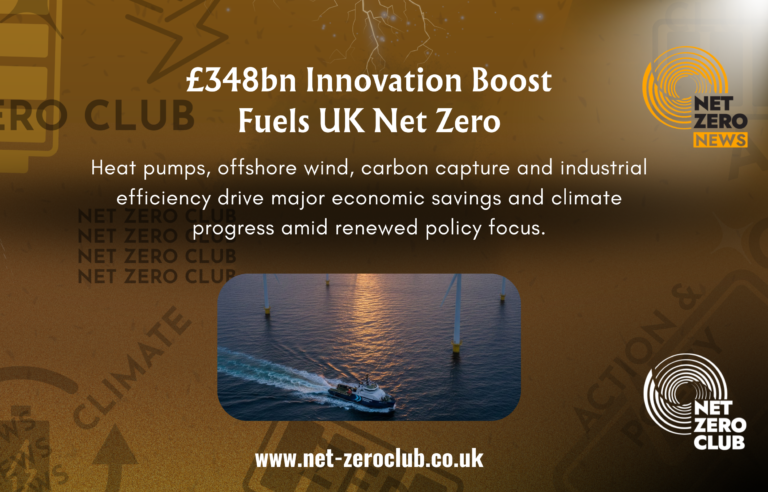
New analysis published in January 2026 highlights the substantial economic gains that UK energy innovation can deliver on the road to Net Zero. The Energy Innovation Needs Assessments (EINAs), undertaken by a consortium led by the Carbon Trust, including University College London, Mott MacDonald and Pengwern Associates, on behalf of the Department for Energy Security and Net Zero, provides an in‑depth picture of where strategic innovation can yield the most significant impact. It projects that rapid scaling of proven technologies could reduce the cumulative cost of achieving Net Zero by between £203 billion and £348 billion between 2025 and 2050, compared to a scenario of low innovation. Notably, key technologies driving these savings include air‑source heat pumps (cumulative system savings of £110 billion and GVA of £5.7 billion), bioenergy with carbon capture and storage (BECCS), direct air carbon capture and storage (DACCS), and offshore wind. At full deployment, these technologies could support up to £19 billion in UK gross value added and 470,000 jobs by 2050.
This analysis builds on evidence from the UK government’s £1 billion Net Zero Innovation Portfolio (NZIP) covering 2021–2025, which has already supported energy innovation across the economy, creating approximately 7,500 jobs and attracting around £917 million in public and private investment to date.
However, the findings make clear that innovation alone is not enough, the real challenge now lies in scaling these technologies rapidly and effectively. Key barriers include supply chain limitations, skills shortages, and regulatory obstacles, which may stall deployment unless addressed proactively. As DESNZ moves forward with its Cleantech Innovation Challenges, the report stresses the need for coordinated policy, investment, demand stimulation, and infrastructure readiness to ensure innovations can deliver their potential at scale.
What this means:
This analysis underscores that the path to UK Net Zero runs through intensified innovation and coordinated action. Proven technologies already exist, now must come rapid deployment supported by strategic investment and policy alignment. By backing innovation and removing systemic barriers now, the UK stands to unlock massive economic benefits while accelerating decarbonisation.
Upcoming Events:
Net Zero Scotland Projects Conference -3 September 2026, Edinburgh
Net Zero Nations Projects Conference – 6 October 2026, Westminster
Do you have technologies, innovations or solutions that can help public-sector net-zero projects?
Email: lee@net-zero.scot