Got net-zero news, project updates, or product launches to share?
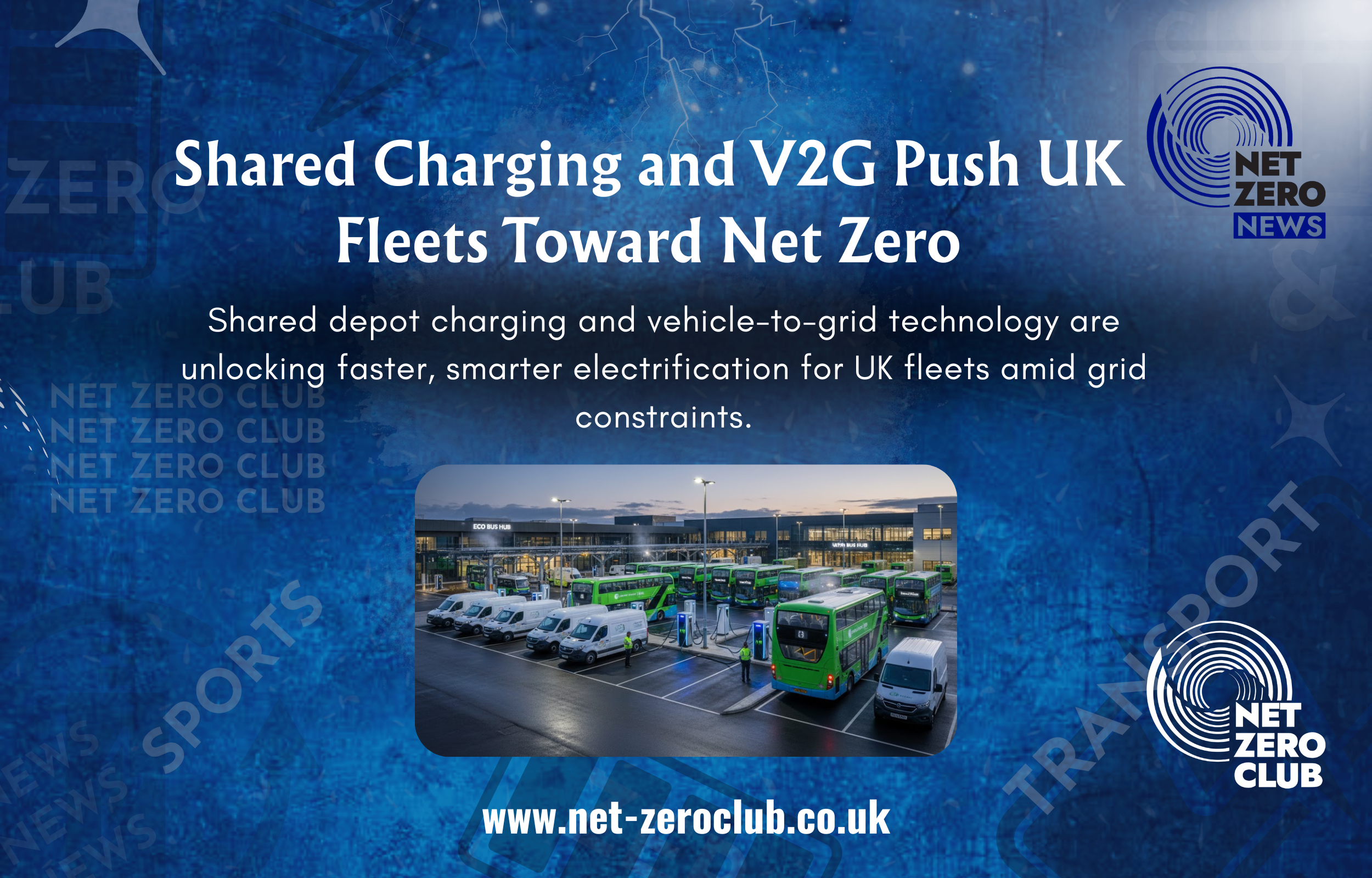
 Shared Depot Charging and V2G Tech Propel UK Fleets Toward Net Zero
Welcome to Net Zero News, your daily briefing on the UK’s transition to a low‑carbon future.
In a series of important developments across the UK, commercial vehicle operators and public-sector bodies are pioneering innovative charging solutions to drive down emissions and accelerate the electrification of transport. Two key initiatives stand out: the opening up of depot charging to third‑party fleets and the rollout of pioneering vehicle‑to‑grid (V2G) technology.
First Bus has teamed up with an electric charging business to enable other fleets to share its depot charge points. Through this arrangement, fleets using the partner’s aggregation platform can tap into eleven depot locations equipped with ultra‑rapid charging (150‑350 kW), all backed by renewable energy. This collaboration repurposes existing infrastructure and enables fleets to access high‑powered charging without the need to build their own facilities. Fleet managers benefit from operational flexibility, reduced costs, and higher vehicle uptime thanks to centralised billing and integrated access control through the aggregation platform.
Meanwhile, Denbighshire County Council’s Fleet Services Centre has become one of the UK’s first to install AC vehicle‑to‑grid (V2G) chargers at its depot. This technology allows electric vehicles to feed stored energy back into the grid or building during peak times, offering energy arbitrage opportunities, cost savings, and resilience improvements. The depot is also equipped with solar panels and battery storage, making it a model of a smart local energy system. The trial forms part of a broader innovation programme supporting such installations across multiple UK local authorities.
These approaches respond to mounting pressures over grid access for depot charging. A recent study warned that some operators could face delays of up to 15 years for grid connections—well past the phase‑out dates for internal combustion commercial vehicles. Shared infrastructure and V2G offer pragmatic ways to clear these gridlock risks and support net‑zero targets.
What This Means:
These developments underscore a shift toward more collaborative, efficient, and resilient charging strategies that go beyond simply deploying electric vehicles. Sharing depot infrastructure unlocks more rapid fleet electrification by leveraging existing assets, while AC V2G technology introduces a flexible, bi‑directional energy flow that benefits both fleets and the electricity system. Together, these strategies help scale up low‑carbon transport and reduce barriers to zero‑emission operations.
Upcoming Events:
Net Zero Scotland Projects Conference -16 June 2026, Edinburgh
Net Zero Nations Projects Conference – 6 October 2026, Westminster
Do you have technologies, innovations or solutions that can help public‑sector net‑zero projects?
Email: lee@net-zero.scot