Got net-zero news, project updates, or product launches to share?
 Rapid Expansion in UK’s EV Charging Infrastructure Accelerates Fleet Transition

Welcome to Net Zero News, your daily briefing on the UK’s transition to a low‑carbon future.
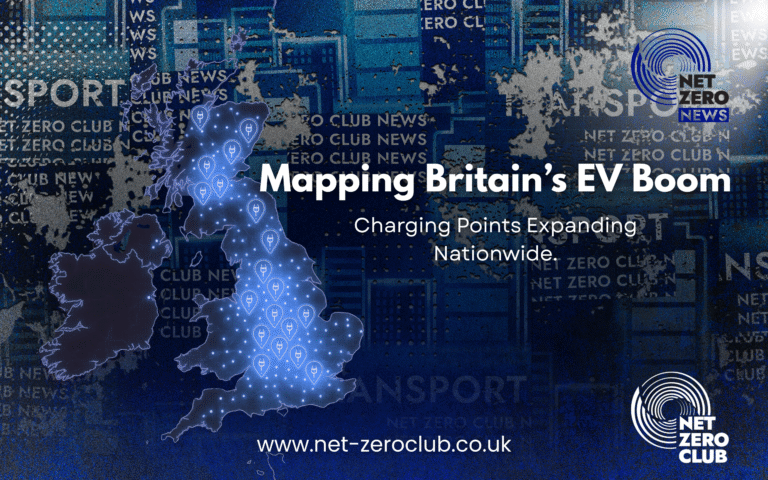
Britain’s electric vehicle (EV) charging infrastructure is growing at an unprecedented pace, reflecting rising demand from both private drivers and commercial fleets. In the third quarter of 2025, almost 4,000 new charge points were added nationwide, bringing the total to more than 86,000 charging devices across 43,507 locations an increase of 22% compared to the same period in the previous year. Notably, ultra‑rapid devices delivering 150 kW and above have surged by 51% year‑on‑year, now reaching 9,290 units, while the number of rapid charging hubs defined as locations with six or more rapid or ultra‑rapid chargers has risen to 663.
This acceleration builds on earlier momentum. In the first quarter of 2025, over 3,100 new charge points were deployed, raising the national total to approximately 76,840 an annual increase of 29%. Ultra‑rapid chargers, in particular, grew by nearly 66%, now accounting for 22% of all installations. These trends continued across the year: by the end of October, the UK hosted 86,798 charging devices across 44,142 locations, a 22% year‑on‑year rise.
Earlier in 2025, the country marked significant milestones as the total number of public charge points surpassed 75,000 by February representing a 32% annual increase. By mid‑year, the figure had climbed further to over 85,000 devices, illustrating sustained infrastructure expansion.
Regional deployment patterns also reveal rapid development. In the first half of 2025 alone, 8,670 new charge points were installed a 27% increase from the previous year bringing the total to over 82,300 devices nationwide. Importantly, Scotland and the North West have seen strong growth in high‑powered chargers (of 50 kW+), increasing by 29% and 21% respectively.
The dramatic rise in ultra‑rapid infrastructure reflects a broader shift toward en‑route charging hubs at motorway service areas, retail parks and other key destinations, offering high-powered, fast charging solutions that align with fleet requirements and consumer demand for speed and convenience. In 2024 alone, more than 20,000 new charge points were installed an astonishing 38% jump year‑on‑year with ultra‑rapid devices growing by 84% and charging hubs more than doubling from 264 to 537.
Complementing infrastructure growth, innovative partnerships are supporting fleet electrification. Allstar’s UK‑wide charging network now includes First Charge’s depot access, enabling fleets to tap into high‑powered, secure ultra‑rapid charging facilities at bus depots with speeds up to 360 kW, enhancing accessibility for larger vehicles like eHGVs and vans. Meanwhile, fleet optimisation is being boosted by technology integration: Webfleet now offers decarbonisation reports in partnership with Dynamon, empowering operators with data‑driven planning for vehicle replacement, charger deployment and total cost of ownership analysis, at significantly reduced cost versus traditional consultancy.
Further innovation includes the first UK fleet depot installation of AC‑based vehicle‑to‑grid (V2G) chargers in Denbighshire County Council as part of the V2VNY trial, exploring cost‑effective solutions to enhance energy resilience and reduce operating expenses.
Yet challenges remain. The Society of Motor Manufacturers and Traders warned that depot charging infrastructure expansion is being held back by grid connection delays, which could stretch up to 15 years far exceeding the planned phase‑out timeline for non‑zero‑emission commercial vehicles.
What this means:
The UK’s EV charging infrastructure is rapidly scaling up, particularly in ultra‑rapid hubs that support fleet mobility and long‑distance travel. Fleet operators are gaining greater access to diverse charging environments from public ultra‑rapid hubs to depot facilities enhanced by smart planning tools. However, infrastructure constraints such as grid connection delays must be addressed promptly to ensure the transition to net‑zero transport remains on track.
Upcoming Events:
Net Zero Scotland Projects Conference -16 June 2026, Edinburgh
Net Zero Nations Projects Conference – 6 October 2026, Westminster
Do you have technologies, innovations or solutions that can help public‑sector net‑zero projects?
Email: lee@net-zero.scot